


We can make pellets and granulate from different mixes of raw materials on request.
Miscanthus pellets PELLEGREEN BIO
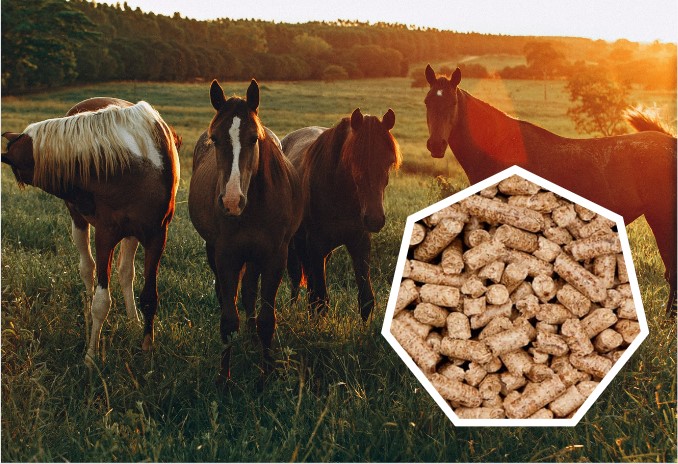
Bedding for farm animals PELLEGREEN BIO is manufactured from the following types of straw:
miscanthus
Benefits of using
straw bedding for farm animals
straw bedding for farm animals

100% natural (eco-product)
Pellets are 100% plant-based, do not contain chemical additives, and therefore are safe for animals and humans
Pellets are 100% plant-based, do not contain chemical additives, and therefore are safe for animals and humans
Hypoallergenic
During the granulation process, the biomass undergoes dust removal and heat treatment (sterilization), which destroys harmful microorganisms and bacteria. Due to this, the bedding is suitable for animals with sensitive skin
During the granulation process, the biomass undergoes dust removal and heat treatment (sterilization), which destroys harmful microorganisms and bacteria. Due to this, the bedding is suitable for animals with sensitive skin
Improve the microclimate
Miscanthus pellets prevent the formation of ammonia from urea. They bind nitrogenous compounds to straw proteins. It results in fewer pests, such as flies, in the stall
Miscanthus pellets prevent the formation of ammonia from urea. They bind nitrogenous compounds to straw proteins. It results in fewer pests, such as flies, in the stall
Free of germs
The heat treatment of raw materials with hot air and high pressure during granulation destroys most bacteria and fungi
The heat treatment of raw materials with hot air and high pressure during granulation destroys most bacteria and fungi
Economical in use
The bedding does not require frequent replacement compared to straw. Its maintenance takes less time
The bedding does not require frequent replacement compared to straw. Its maintenance takes less time
Easy to dispose of
Used pellets turn into an excellent natural fertilizer. Farmers with biogas plants can process used litter in an environmentally friendly way into biofuel
Used pellets turn into an excellent natural fertilizer. Farmers with biogas plants can process used litter in an environmentally friendly way into biofuel
Convenient storage
The storage area of miscanthus pellets takes up several square meters compared to the huge bales of straw that fill entire warehouses
The storage area of miscanthus pellets takes up several square meters compared to the huge bales of straw that fill entire warehouses
Characteristics
| Pellet diameter | 6, 8 mm |
| Pellet length | ±50 mm |
| Humidity | <10% |
| Protein | 3% |
| Composition | 100% miscanthus straw |
for farm animals

in bulk
in 500-1000 kg big-bags
in 10-25 kg p/e bags
Application of bedding for farm animals
Miscanthus pellets PELLEGREEN BIO are an excellent alternative to classic straw bedding. Pellets are made from 100% natural plant materials without preservatives or impurities. The bedding is ideal for horses, ponies, alpacas, and cattle.
Miscanthus pellets have excellent water absorption capacity and reduce the risk of bacterial growth and unpleasant odors, thanks to the heat treatment of the biomass and high pressure during pressing. In addition, their high level of renewability makes them an environmentally friendly solution, contributing to the conservation of natural resources. Using miscanthus pellets as bedding is a convenient option for caring for animals and their health and comfort.
Pellets are easy to use. Daily remove only manure and heavily soaked area installs, saving much time and effort in caring for stalls or pens. Pellets are packaged in convenient bags on pallets, so they take up much less storage space compared to massive straw bales.
Recommendations for use:
- Initially, clear the stall/pen of straw and feces.
- Next, spread the bedding evenly on the floor in a layer 5 cm high. For 10 m² of pen, you will need approximately 6 bags of 20 kg each.
- It is necessary to remove hard excrement from the surface of the litter daily. It is enough to level wet areas with a rake to evenly distribute and dry the moisture.
- To support a 10m² stall / pen, add a 20kg bag of straw pellets approximately once a week.
- The period for repeated replacement of bedding depends on the area of the stall/pen, the intensity of bedding use, and the type of livestock. We recommend fully updating it once every 3 months but at least once every 6 months.
- Used litter, saturated with feces and urine, can be applied/spread directly onto the field as fertilizer without waiting for a full composting cycle.
Quality certificates
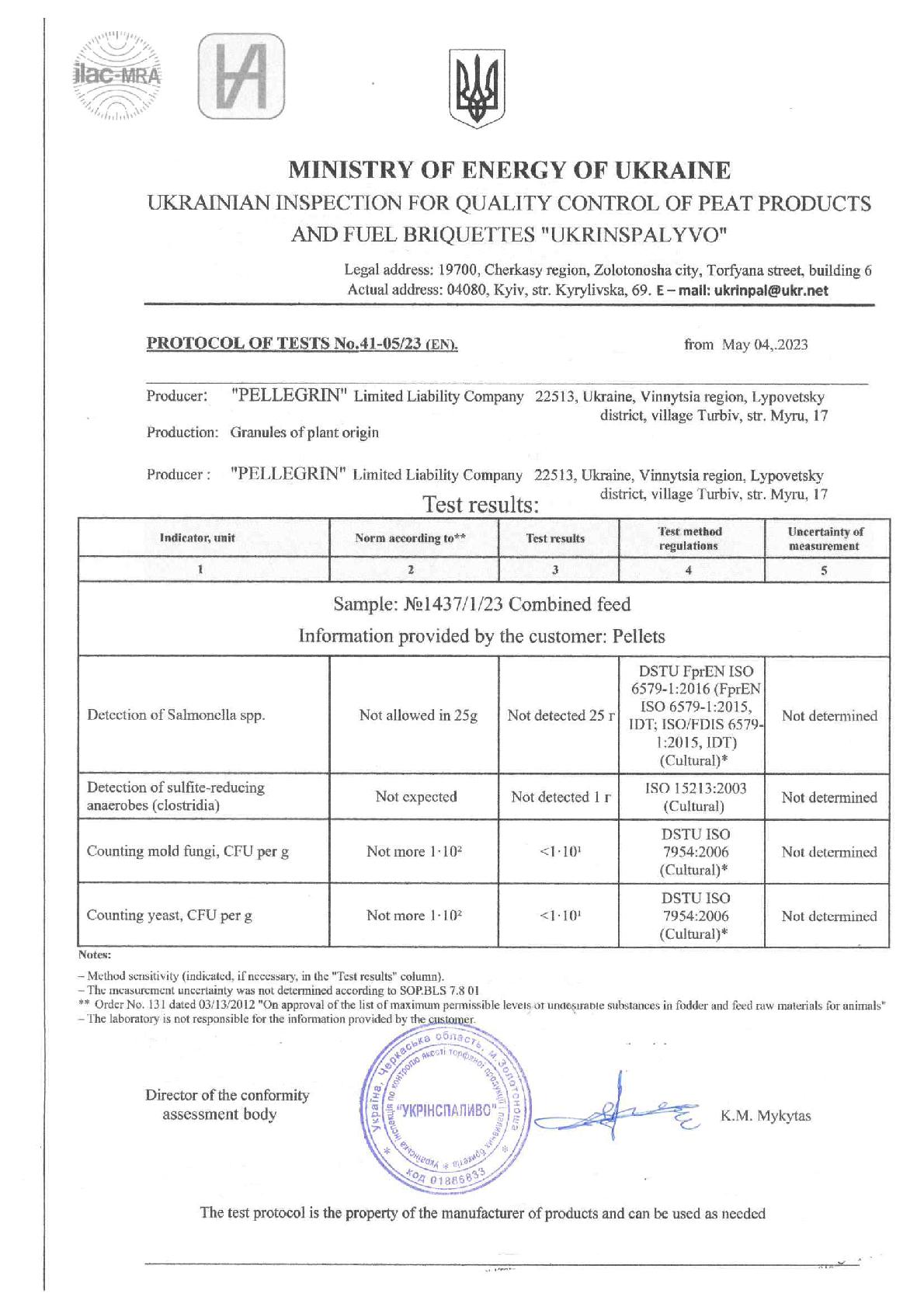
Bacteriological testing protocol of granules

Протокол бактеріологічного випробування гранул

Leave your details
We will contact you within three hours
Leave your feedback
We will call you to learn more about your impressions