


We can make pellets from different mixes of raw materials on request
Miscanthus fuel pellets PELLEGREEN FUEL
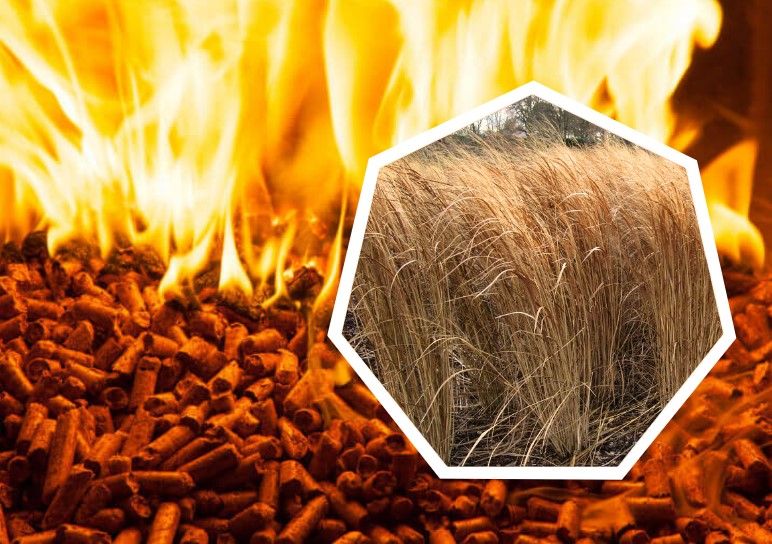
Pellets
ТМ PELLEGREEN FUEL are manufactured from the straw of
ТМ PELLEGREEN FUEL are manufactured from the straw of

miscanthus
Benefits of using
fuel miscanthus pellets
fuel miscanthus pellets

100% natural
Pellets made of straw of various plants without any additives
Pellets made of straw of various plants without any additives
Renewable
Miscanthus pellets are fully biodegradable
Miscanthus pellets are fully biodegradable
Environmentally friendly
Miscanthus pellets are CO2-neutral. It is emitted 15 times less CO2 than when burning natural gas
Miscanthus pellets are CO2-neutral. It is emitted 15 times less CO2 than when burning natural gas
Fire safety
Compared to gas, oil, and firewood fire, the protection is much higher because miscanthus pellets are significantly less exposed to spontaneous combustion
Compared to gas, oil, and firewood fire, the protection is much higher because miscanthus pellets are significantly less exposed to spontaneous combustion
Convenient for transportation and storage
The homogeneous structure in terms of shape and size and the high bulk density of the pellets facilitates their logistics and enables all loading-unloading and boiler combustion processes to be automated
The homogeneous structure in terms of shape and size and the high bulk density of the pellets facilitates their logistics and enables all loading-unloading and boiler combustion processes to be automated
Structure homogeneity
In shape, size allows you to automate everything processes of loading-loading and combustion in boilers of fuel pellets
In shape, size allows you to automate everything processes of loading-loading and combustion in boilers of fuel pellets
Economically viable
Miscanthus pellets are more competitive than other forms of energy
Miscanthus pellets are more competitive than other forms of energy
One ton of fuel pellets PELLEGREEN FUEL is equal to
1.2 tons of wood
450 cubic meters of gas
420 liters of diesel fuel
400 liters of fuel oil
Pellets characteristics
| Diameter | 8 mm |
| Length of pellets | ±50 mm |
| Ash content | <3% |
| Humidity | <10% |
| Bulk density, min. | 655 kg/m3 |
| Caloric Value | 17.5-19.5 МDj/kg |
| Gross Caloric Value | 4700 kсal/kg |
| Mass fraction of light substances, not less than | 88% |
| Total Sulfur | 0,2% |
pellets

in bulk
in big bags (from 500 kg to 1200 kg)
in a 15 kg bag
We also pack according to buyer’s request in small packets/bags.
Purpose of fuel pellets
Miscanthus straw pellets are an innovative biofuel form manufactured from miscanthus plant material. This high-yielding and resilient crop species has found its use as an excellent source of biomass for pellet production, a crucial aspect of sustainable energy production.
The main advantage of straw pellets have a low moisture content (W), which is only 8–10%, compared to a more classic type of fuel, such as firewood, which has a moisture content of 30%. Due to this, less heat is spent on evaporating moisture during combustion, which, in turn, affects the calorific value: for straw pellets, it averages 17 MJ/kg, and for firewood (W 30%) – 12 MJ/kg (the more indicator, the more heat we get from fuel combustion). For example, 1 ton of fuel pellets is enough to produce 4000 kW/h of thermal energy, and the combustion of 1 ton of wood (W 30%) will deliver approximately 3,400 kW/h. In addition, due to the moderate ash content in pellets – less than 3% in a dry state – combustion efficiency increases, allowing the economical use of this material.
These pellets are among the most renewable, eco-friendly fuel materials globally. Due to its much shorter growth phase, straw is a much safer and more stable raw material than wood. When burning, straw pellets emit 15 times less CO2 into the atmosphere than natural gas since, during ripening, the crop absorbs the same amount of carbon dioxide as it can release during combustion.
Recommendations for storing pellets:
The following conditions must be provided at the place of their storage to keep pellets in good condition:
• Dryness and sufficient ventilation of the room;
• High level of fire safety;
• Protection from direct sunlight;
• Stand (it is better to use pallets or wooden boards).
Quality certificates

Certificate SGS KZR BIO
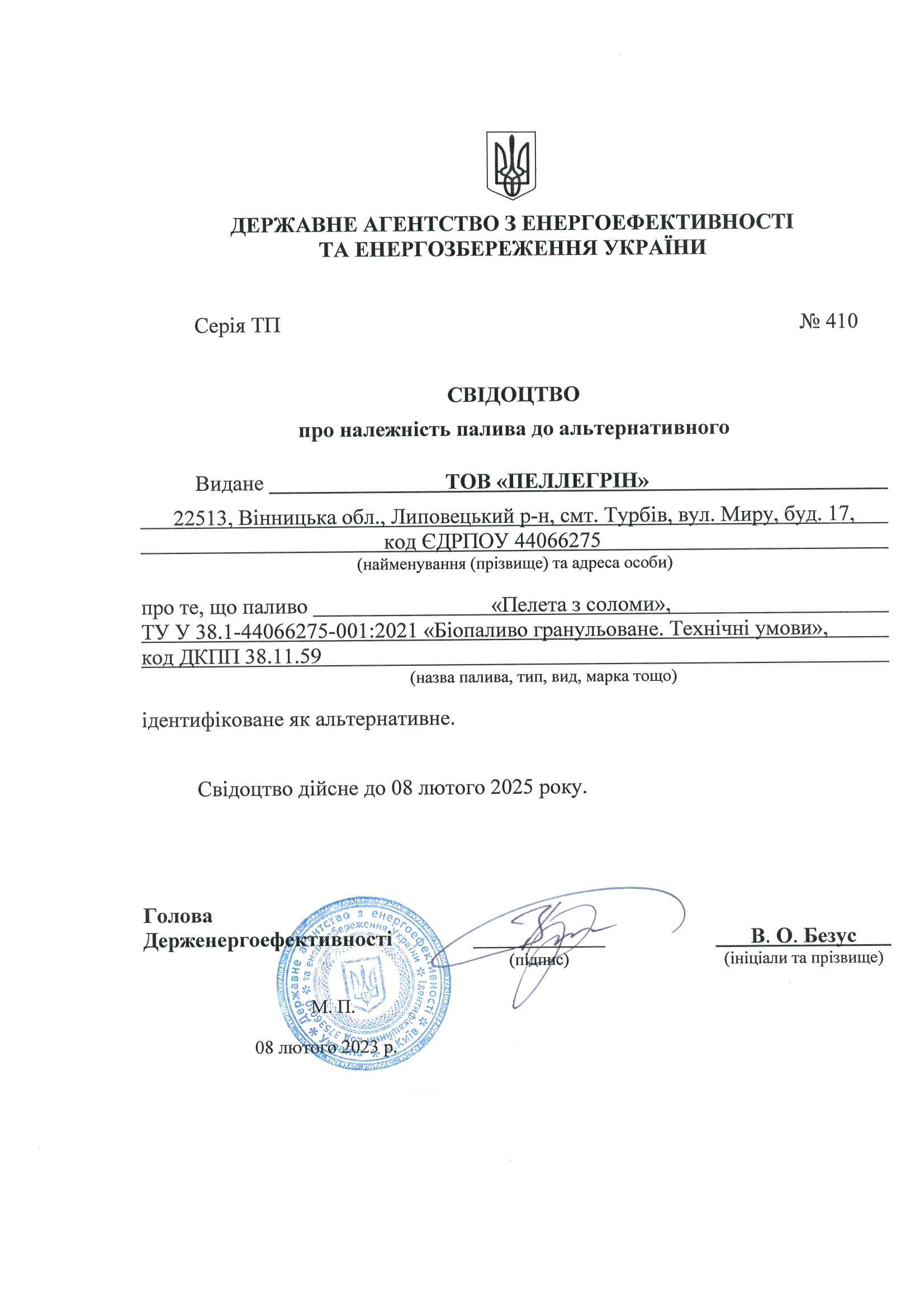
Свідоцтво щодо приналежності пелет до альтернативного виду палива

Протокол випробувань пелет із міскантуса 2023

Leave your details
We will contact you within three hours
Leave your feedback
We will call you to learn more about your impressions